January is when the most people go looking for a gym. The New Year resolution period drives a seasonal spike in enrollment interest, and that surge is short. If your flyers land while motivation is high, you catch people at the exact moment they are ready to act. Wait too long and the enthusiasm fades.
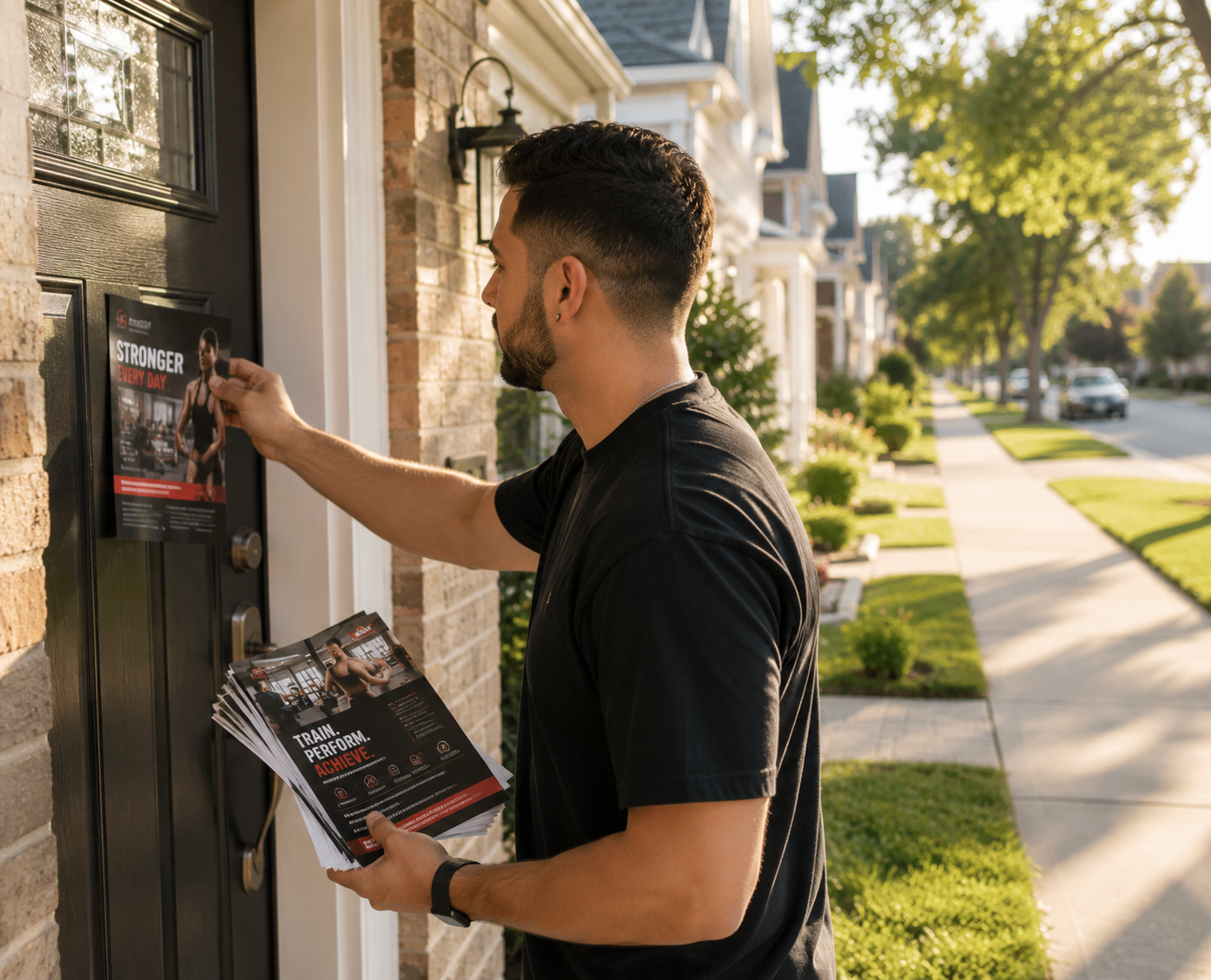
For a local studio, the practical window runs from late December through the first two weeks of January. Print and hand off distribution before the holidays so flyers hit doorsteps as people return home and start planning. A flyer that arrives on January 2nd feels timely. The same flyer on January 25th competes with fading resolve.
Timing is the whole game here. This is not a slow-burn brand campaign. You are trying to be the studio a nearby resident thinks of during the two or three weeks they are most likely to sign up. That means getting physical flyers into the right hands quickly, close to your location.
The reader most likely to walk through your door is someone who lives a short drive away. Residents within a short drive radius are the most realistic conversion targets for a local studio, because convenience decides whether a resolution becomes a routine. A neighborhood flyer push plays directly to that advantage.
Mapping Residential Zones Within Your Drive Radius
Start with your location on a map and think in terms of how far someone will realistically travel to work out. For many studios that is a short drive, not a cross-town trek. Draw a loose boundary around the neighborhoods inside that radius and treat everything outside it as a lower priority for this push.
Inside that boundary, look for the residential pockets that fit your membership. Apartment clusters, townhome developments, and dense single-family streets all deliver flyers efficiently because doors are close together. A worker covers more ground per hour on a tight block than on a sprawling rural road.
Break the area into zones
Rather than treating the whole radius as one job, divide it into smaller geographic zones. On FlyerBoard, campaigns are divided into geographic zones, and worker assignments and proof are attributed to a specific zone. That structure gives you real control over coverage.
- Prioritize by proximity. The closest zones tend to convert best for a local studio, so cover them first.
- Size zones for a single shift. A zone that one worker can finish in a few hours is easier to track than a huge, vague area.
- Match zones to housing type. Keep dense apartment blocks in their own zone so the flyer count matches the door count.
Zoning also makes it obvious where your flyers actually went. If one neighborhood produces more inquiries, you can put more of next year's budget there. If you operate in a major metro, FlyerBoard publishes local pages for New York City, Los Angeles, and Chicago. For a deeper look at picking the right approach, see the guide on choosing a distribution method.
What to Put on a New Year Gym Flyer
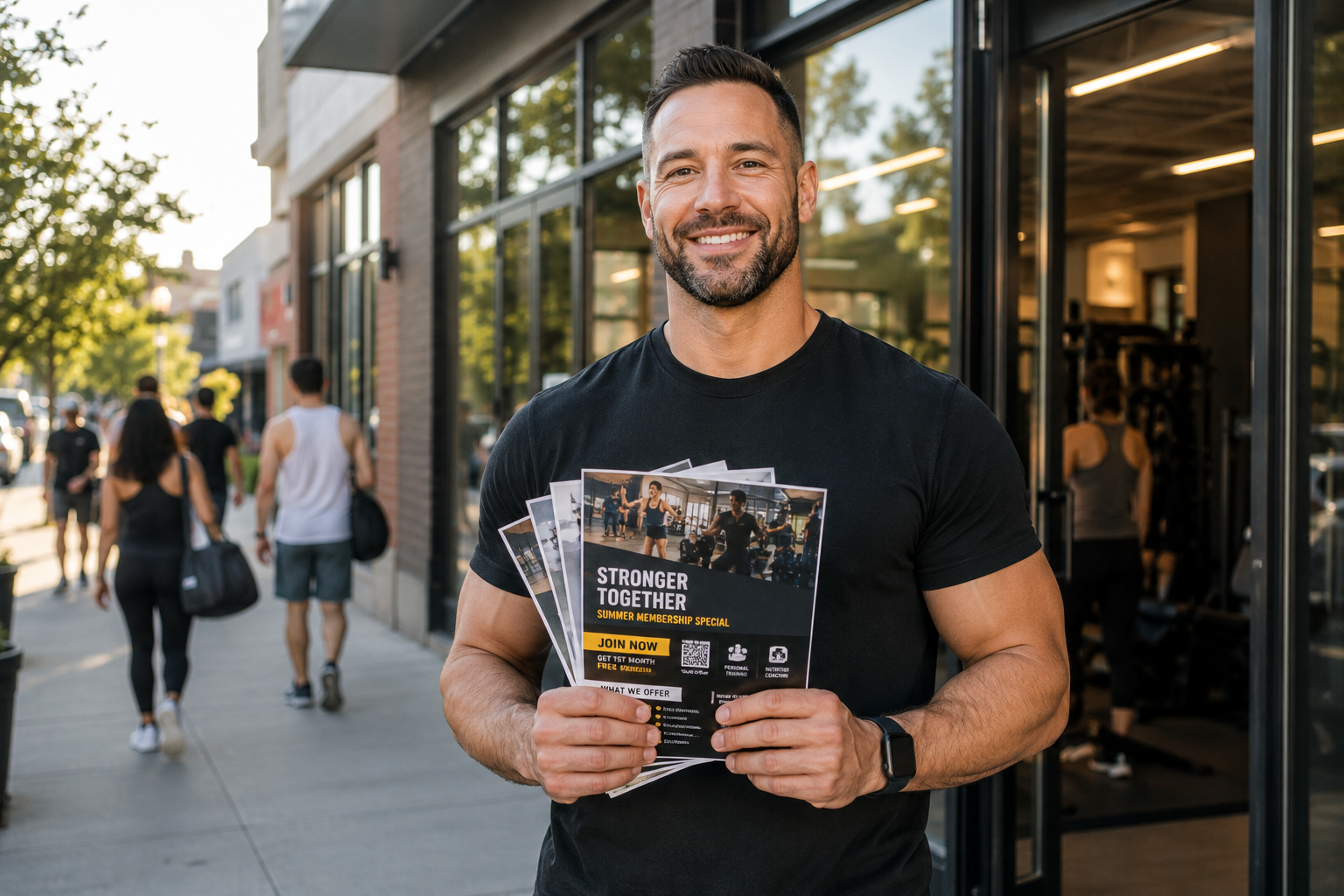
A resolution-season flyer has one job: make a nearby resident picture themselves walking into your studio this month. Lead with a clear, time-bound offer and make the location obvious. Someone glancing at the flyer for two seconds should know what you are offering, where you are, and why now.
The offer
Anchor the flyer to a January-specific promotion. These are illustrative examples only, not FlyerBoard data or recommendations:
- A first-month intro rate for new members who join before a set date.
- A free class pass or a free week trial to lower the commitment.
- A waived joining fee for sign-ups during the first two weeks of January.
Whatever you choose, put a deadline on it. A resolution offer works because it gives people a reason to act while motivation is high.
The design
Keep it readable at arm's length. A crowded flyer gets ignored on a doorstep.
- One headline. State the offer or the promise in a few words.
- Your address and a map cue. Reinforce that you are close by.
- A single next step. A phone number, a short URL, or a QR code, not all three competing.
- Real proof of what you offer. Class types, hours, and what makes your studio worth the drive.
Print enough to cover your priority zones with a little margin for reprints. A run of 500 or 1,000 flyers is a common example figure, but your number depends on how many doors sit inside your radius. For layout and messaging depth, the flyer marketing strategy guide and the best practices page are worth a read before you send anything to print.
Running the Distribution and Confirming It Happened