
industry playbook
Coffee Shops and Cafés: Timing Morning-Rush Hand Distribution to Capture Commuters
A practical guide for café owners on timing hand-to-hand flyer distribution to the 7-9am commuter window and positioning workers near transit stops before people buy coffee elsewhere.
Why the 7-9am window decides your morning campaign
If you want more morning commuter traffic, the single most important decision is when your flyers reach people, not how many you print. Commuter foot traffic near transit stops peaks roughly between 7 and 9am, and that narrow band is when a coffee decision gets made. A flyer handed to someone at 7:20am, before they reach the platform, can change where they buy. The same flyer handed at 10am reaches people who already have a cup in their hand.
This is why timing beats volume for a café. Five hundred flyers spread across a whole day will mostly land on people who are not commuting to work and not thinking about coffee. A smaller batch handed out inside the two-hour rush hits people at the exact moment they're choosing.
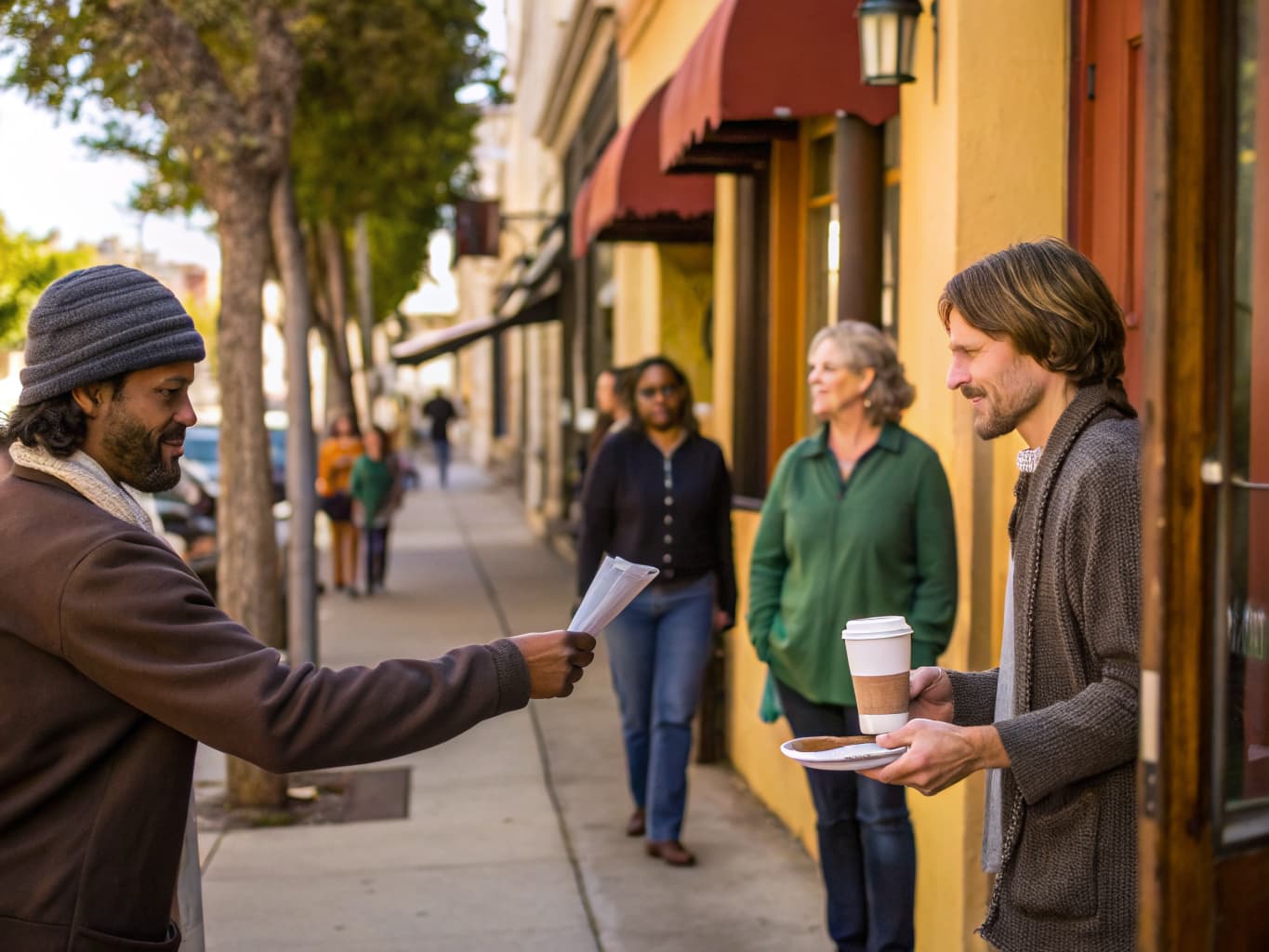
Hand Distribution is the method built for this. Workers hand flyers directly to people on the street, which lets you concentrate real human contact into the window that matters. You're not hoping someone notices a poster on a pole. You're putting an offer in a commuter's hand while they're still deciding.
The takeaway: plan your campaign around those two hours. Everything else in this guide, from where you place workers to what the flyer says, exists to make the most of that short daily opportunity.
Reading your block: transit corridors and foot-traffic direction
Before you brief anyone, walk your block during the morning rush and watch which way people move. Commuters flow toward station entrances in the morning, and they follow predictable corridors: the side of the street closest to the platform, the crosswalk that feeds the turnstiles, the sidewalk that connects a residential pocket to the stop.
Positioning a handout worker within a short walk of a station entrance improves the odds a flyer reaches a commuter before they buy coffee elsewhere. That last part is the whole game. If your worker stands past the station, on the office-building side, most people they meet have already passed a dozen coffee options.
Sketch a quick map of your surroundings and mark three things:
- Station entrances and the direction commuters approach them from.
- Feeder sidewalks where foot traffic concentrates on the way in.
- Your own door relative to that flow, so you catch people while your shop is still a realistic detour.
FlyerBoard campaigns are divided into geographic zones, and worker assignments and proof are attributed to a specific zone. Turn each corridor you identified into its own zone. One zone might be the north entrance crosswalk, another the feeder sidewalk two blocks up. Keeping zones tight and named after real corners makes it clear where coverage happened and where it didn't.
If you operate in a covered city, the local pages for New York City, Los Angeles, and Chicago are a useful starting point. For a deeper read on placement, see best places to hand out flyers.
What to print and offer for a hurried commuter
A commuter reads your flyer in about two seconds while walking. Design for that. The offer should be legible at arm's length, the redemption instruction should be obvious, and the whole thing should survive being shoved in a coat pocket.
A coupon or time-limited offer printed on the flyer raises redemption likelihood, so lead with it. Same-morning offers work especially well because they match the moment the flyer is received. Something like "$1 off any drink before 10am today" gives a reason to turn around now rather than file the flyer away and forget it.
Keep the essentials in this priority order:
- The offer, in the largest text on the page.
- The redemption window and any code.
- Your café name and the exact walking distance or nearest cross street.
- A tiny map or one-line direction ("30 seconds from the north exit").
On quantities, plan to a realistic hand-out pace rather than a big round number. As an example only, if a single worker can comfortably hand out 150 to 250 flyers across the two-hour rush, printing 500 for a two-corner morning gives you a small buffer without a pile left over. Treat those figures as illustrative and adjust after your first run.
For layout and messaging ideas, the flyer marketing strategy guide goes deeper on what makes a handout convert.
Setting up the campaign and staffing the corners
On FlyerBoard, a business creates a campaign, funds it, and then workers apply or are invited. For a morning café push, build the campaign around the corridors you mapped and the 7-9am window.
A practical setup looks like this:
- Create one campaign with a zone for each transit corridor you identified.
- Set the working window to the rush, so handouts happen when commuters are actually moving.
- Position workers near the station entrance on the approach side, so flyers land before people pass other coffee options.
- Fund the campaign and invite workers or let them apply.
Workers submit photo proof of distribution, and that proof is reviewed before payout is released. Because proof is tied to a specific zone, you can confirm that the north-entrance corner was actually staffed during the rush and not swapped for a quieter spot. Ask for proof photos that show the assigned corner and the morning conditions so coverage is easy to verify.
New to building a campaign? Start with how it works for businesses, and read how to create a flyer campaign that gets accepted quickly so workers pick yours up. If you're weighing methods, how to choose the right distribution method explains why hand-to-hand fits a commuter push. When you're ready to launch, create a business account. Costs are covered on the pricing page.
Measuring what worked and adjusting next week
Track redemptions by corridor so you know which zone earned its keep. The simplest method is a unique code or a slightly different offer per zone, so a coupon handed at the north entrance reads differently from one handed on the feeder sidewalk.
Here's an illustrative example, not FlyerBoard data. Say you run two zones one week and the north-entrance zone brings back noticeably more coupons than the feeder-sidewalk zone. The next week, shift more flyers and a second worker to the north entrance and trim the weaker corridor. Small weekly reallocations like this compound faster than reprinting a bigger batch and hoping.
Log a few numbers each morning: flyers handed out per zone, coupons redeemed, and the redemption window used. After two or three weeks you'll have a picture of which corners and which offers pull.
For pitfalls to avoid as you iterate, see common flyer campaign mistakes and the broader best practices guide.